
Fauvism* Collision
Minced Metaphors
We’ve almost made it to the end of the week, so it’s time to lighten the mood with muddled metaphors, idioms, and other valiant-but-failed attempts at figurative language. The results are inadvertent yet successful attempts at levity, jocularity, and generally increased levels of dopamine.
I destroy and recombine perfectly serviceable metaphors, idioms, and other innocents on a regular basis. Because I avidly collect others’ with glee, I know I’m not alone.
I’ve heard them called malaphors and malaprops, but I strongly disagree with using malaprop as any part of a description; first, because the term is ill-applied in an ironic twist (malaprops are intentional attempts to sound grand); and second, because mal itself, meaning “bad” is simply untrue—fun with words is never bad!
I’d go for something like risiphor or ridiphor, using the Latin risus, past participle of ridere "to laugh," meaning "laughable, capable of exciting laughter, comical" + pherein "to carry, bear" (from PIE root *bher- (1) "to carry," also "to bear children"). The result? “bearing laughter offspring.” Perfect!
As a bonus, who could resist saying, “That is patently risiphorous!” or “Another great ridiphor, Henri!”
Although it bothers some who actually get these expressions right, the endless combinations that the rest of us come up with deserve a wide-girthed mirth berth.
And, even though these might technically appear to be…well…mistakes, I think they show a lack of rigidity at worst, and a creative brilliance at best. In fact, an utterance combining more than two original elements is golden in my book.
So, I say we enjoy these twisted treasures for all they’re cracked up to be. As my daughter used to say when she was but a wee sass, “Mom, that tickles my timbers!”
Happily, it’s genetic~
Who put the roar in uproarious?
It might be the anthropoids who apprehended these animalistic antitheses!
There’s a dead rat in Denmark.
He was caught like a herring in the headlights.
They treated him like a social leopard.
She’s got ants in her bonnet.
A leopard can’t change his shorts.
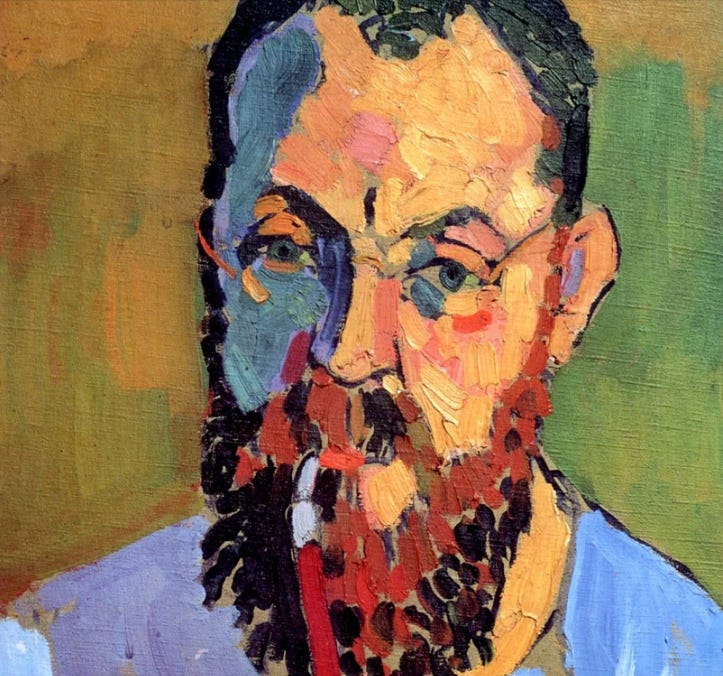
* Fauvism is from French “les fauves,” which translates to “the wild beasts.”
It is the name applied to the work produced by a group of artists (which included Henri Matisse and André Derain) from around 1905 to 1910, characterized by strong colors, often complementary (from opposite sides of the color wheel), fierce brushwork, and sometimes paint applied directly from the tube!
For more on this fascinating style and movement, see https://www.metmuseum.org/essays/fauvism
Thank you for loping in to the Verbihund Café!
Please help spread the word to friends, students, family, colleagues, and random sorts who seem curious—in any sense of the word.
support the love of language and learning with a paid subscription
restack this post
forward to people you know
share on social media